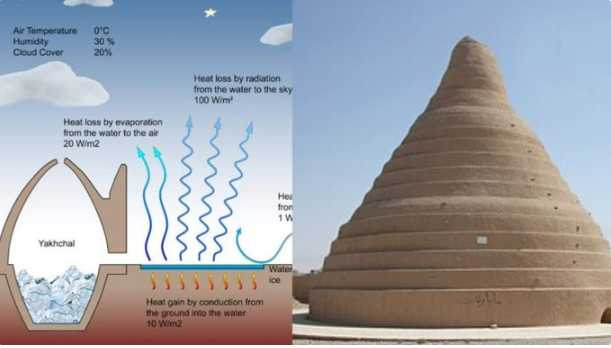
Thirty yrs ago, I met an Iranian engineer, who has studied these structures. She explained that they were an ancient way to keep cool in the summer heat. I was trying to find more info about them, and here... a commenter at Andrei's blog wrote the following:
"Around 400 BC, Persian engineers built structures that could maintain sub-zero temperatures in the middle of a desert summer. No electricity. No refrigeration. No modern technology of any kind. Just literally physics, geometry, and an extraordinarily sophisticated understanding of how heat moves.
The yakhchāl, which translates literally from Persian as ice pit, was an ancient refrigeration structure that allowed the Persian court and, eventually, broader Persian society to have access to cold food, cold drinks, and ice year-round in one of the hottest climates on earth. The above-ground structure was a large domed building, typically built from a heat-resistant mud brick mortar called sarooj, made from sand, clay, egg whites, goat hair, and ash, thick enough to provide substantial insulation against the desert heat outside.
Ice and snow were brought down from the Alborz mountain peaks to the north by runners and pack animals and stored in the yakhchāl through the summer. The ice came from a mountain range via a supply chain that the Persian court had been maintaining for centuries. Today, we take for granted the easy ice bag from the gas station, just imagine how rare and expensive these frozen treats were in ancient Persia.
The oldest documented yakhchāl structures date to approximately 400 BC. Some are still standing in Iran today. The largest known examples could store up to 5,000 cubic metres of ice. Sometimes we need to give our Ancient Ancestors a bit more credit. This feat of engineering is incredible."