FROM RUSSIAN SOCIAL MEDIA:
Ivan the Terrible's Red-Haired Mother: What Her Bones Revealed to Scientists
When researchers opened a burial site in the Moscow Kremlin's Ascension Cathedral in 1998, they expected to find the remains of a medieval queen. They found something that made them question the very concept of beauty as a privilege.
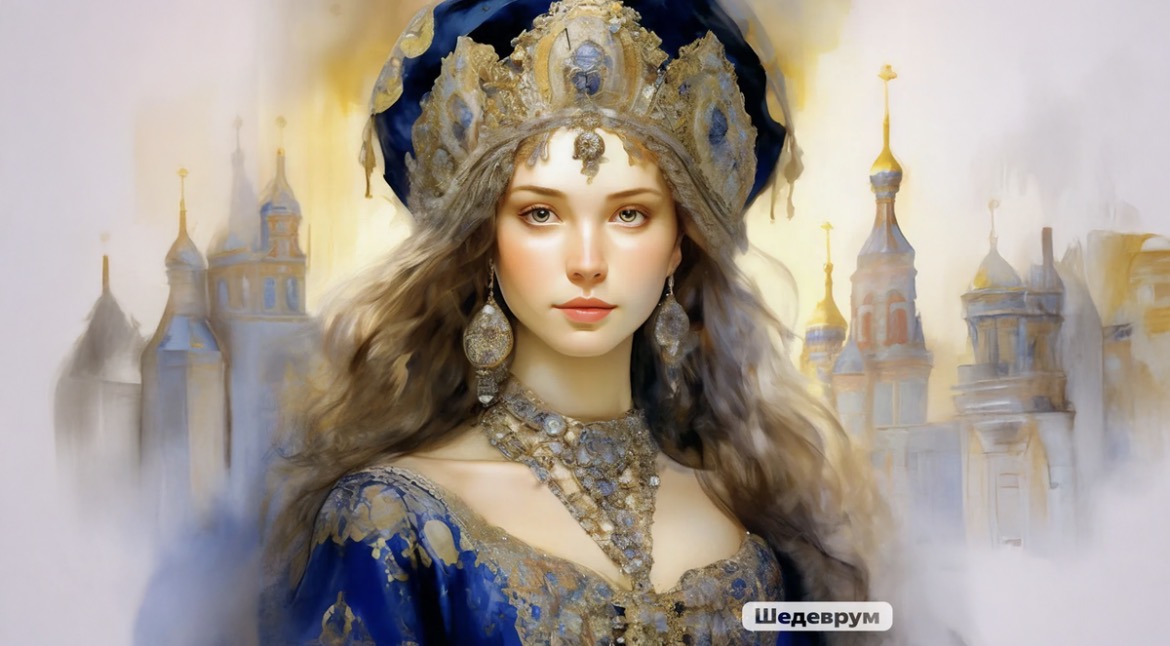
Six lumbar vertebrae instead of five. Reddish-gold locks, preserved after five centuries. Lead levels in the tissue were 28 times higher than normal. This was Elena Glinskaya—the mother of Ivan the Terrible, regent of the Muscovite state, and, apparently, a woman whose beauty was slowly destroying her.
The story begins with another woman.
In 1505, Grand Duke Vasily III held a bride show—a large-scale competition in which about five hundred girls from across the country participated. The winner was Solomonia Saburova, from a boyar family. Not a foreign princess, not the daughter of an ally—simply a girl who caught the eye of the ruler himself. This was almost unheard of in her time.
She was Grand Duchess for twenty years. Twenty years—and not a single heir.
In 1525, Vasily III did something that shocked all of Orthodox Rus': he obtained a divorce from his living wife, sending Solomonia to a monastery. The Patriarch of Constantinople condemned this decision. Metropolitan Barlaam, who refused to bless the divorce, was defrocked. The Church creaked, but relented.
Solomonia was replaced by fourteen-year-old Elena Glinskaya.
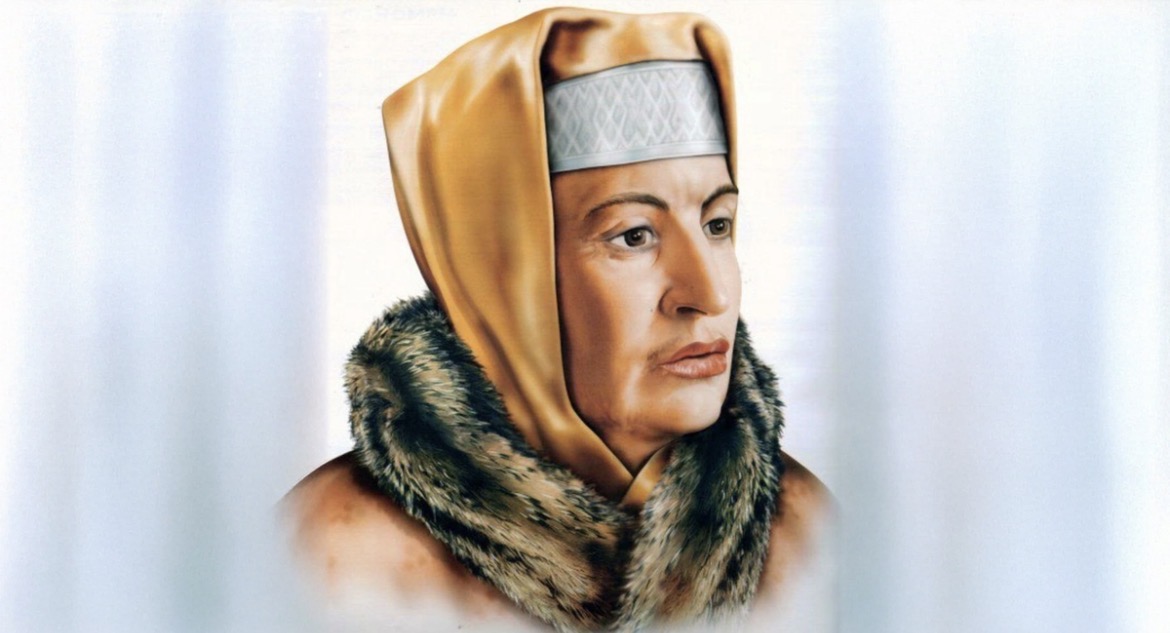
She came from a lineage that traced itself back to Mamai—the same one defeated at Kulikovo Field. However, anthropologists who examined her remains found no Mongoloid features. Elena's mother was the daughter of a Serbian voivode. This is likely where he got his tall stature for the time (165 centimeters), oblong face, straight nose, and high nasal bridge.
Vasili III was three times his bride's age. He was over fifty, she was fourteen.
For her sake, he did something that those around him considered sheer madness: he shaved his beard. According to 16th-century Muscovite beliefs, a beard was a sign of a man's honor and a pleasing appearance. Barbers were seriously considered harbingers of the end of the world. Vasili III kept his mustache and changed into Polish dresses and boots with upturned toes. A fashion for plucked faces and short steps spread throughout the capital.
Patriarch Mark of Jerusalem sent a letter warning: a second marriage would produce "an evil child, shedding blood and burning cities." The groom ignored the letter.
In 1530, Ivan was born. The same Ivan whom history would call Ivan the Terrible.
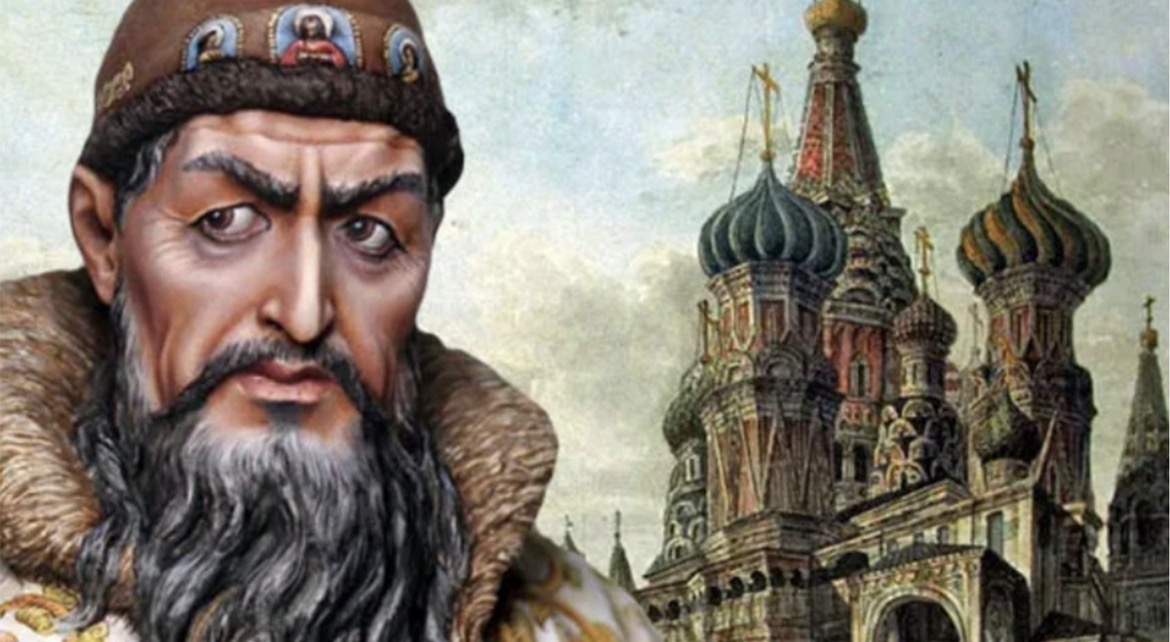
A 20th-century reconstruction of Ivan IV's appearance by anthropologist Gerasimov confirmed that he was Vasily's son. His large nose and elongated face were traits inherited through his father, from his Greek grandmother, Sophia Palaiologina. The theory that the child's real father was Elena's young favorite, Prince Telepnev-Obolensky, was not physically confirmed, although rumors circulated constantly at court.
In 1533, Vasily III died.
Elena was about twenty-five. Her eldest son was three years old.
She became regent, the first woman to actually rule the Muscovite state. Not formally, not in the shadow of a man, but independently, signing decrees, conducting diplomacy, and receiving ambassadors.
During her five years of reign, a monetary reform was carried out: a single coin, the kopeck, was introduced nationwide, becoming the basis of the Russian monetary system for centuries. A truce was concluded with Sweden and Lithuania. A peace treaty was signed with the Polish King Sigismund I. Negotiations were conducted with the Kazan Khanate. For a woman raised at the Lithuanian court and finding herself a widow with young children surrounded by hostile boyars, this was not just governing. It was the survival of the state.
The boyars disliked her. The people did not either.
Elena ordered Vasily's two brothers, who openly expressed discontent, imprisoned. They both died in captivity. Her uncle, Mikhail Glinsky, who had personally brought her to court, also died. She did what all rulers of the time did. But a woman who did this evoked particular hatred.
In 1538, Elena Glinskaya died suddenly. She was about thirty years old.
A test of her remains revealed high concentrations of mercury, arsenic, lead, and barium. Some of these substances were found in cosmetics—the white lead and rouge used by the tsarinas were almost identical in composition to the paints used for painting icons. Others were found in medicines and fabric dyes. Lead in the fabrics was 28 times higher than the norm, and arsenic eight times higher.
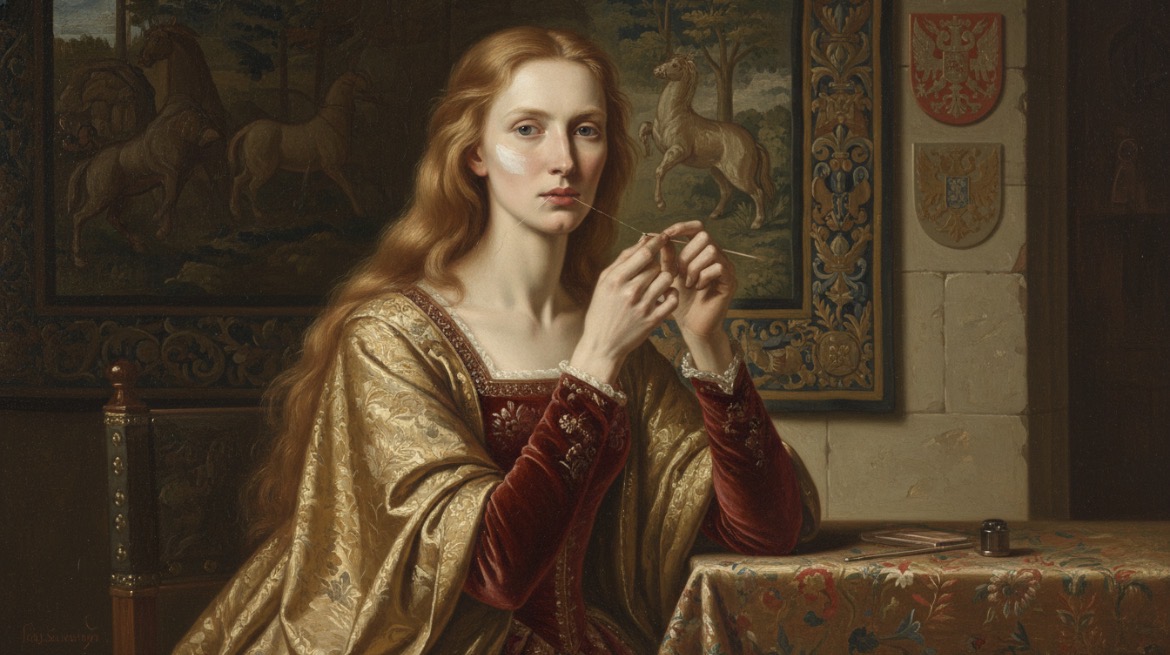
Her beauty required daily maintenance. A thick layer of white lead. A bright blush. By applying cosmetics every morning, she was accumulating the poison in her own body—and likely was unaware of it.
Was the poisoning intentional? Possibly. The boyar circle had motive and opportunity. But the substances that killed her could have worked slowly and on their own—over years of daily use.
The teeth of her remains bear small, characteristic lesions. In Moscow at the time, tsarinas were required to work: embroider, sew. They would bite off thread with their teeth. It was their duty, along with their official duties, to look beautiful for their husbands.
Beauty as a duty. Beauty as an instrument of power. Beauty as something that slowly kills you.
Fragments of a baby's bones were found near her body. Low iron levels indicate that she may have given birth shortly before her death. This child is not mentioned in history.
Ivan the Terrible was eight years old at the time of his mother's death. His younger brother, Yuri, was six. Both were left orphans, surrounded by boyars who were only waiting for her disappearance. That Ivan survived the following years at court and became what he became is another story. But its roots are here.
The anomaly with the sixth lumbar vertebra, discovered by researchers, occurs in approximately one percent of the population. What this meant for her is unknown. Perhaps chronic back pain. Perhaps nothing.
Let's call a spade a spade. Elena Glinskaya was a ruler who carried out financial reform, kept the boyars in check, and pursued a foreign policy on multiple fronts. At the same time, she applied poisoned whitewash to her face every day, bit through her threads with her teeth, and lived under the constant threat of a coup.
Beauty in the patriarchal society of the 16th century wasn't a privilege. It was a requirement, failure to comply with which meant disfavor. And the instruments of this requirement were substances that are now listed as dangerous poisons.
Her reddish-gold hair outlived her by five centuries.
She herself didn't even live to be thirty-five.