FROM RUSSIAN SOCIAL MEDIA:
Recent incidents involving the use of attack UAVs against targets in Moscow and Voronezh demonstrate that the human factor is becoming the most critical vulnerability in modern air defense systems.
The concept of rear area defense requires a transition to highly automated, cost-effective, and mass-produced systems.
While full robotization is difficult to achieve for long- and medium-range systems (such as the S-400, S-500, and prospective modifications of the Buk family of air defense systems) due to the specific nature of their operational use, this task is entirely feasible in the short-range air defense segment.
Experience deploying mobile fire teams (MFTs) staffed exclusively by personnel has revealed the limits of such formations' effectiveness in repelling dense air attacks.
Human physiological limitations—delayed reaction times, cognitive errors under stress, and the difficulty of calculating lead time and firing large-caliber systems at high-speed, small targets—objectively reduce interception effectiveness. Stabilization of the situation is impossible without the integration of automatic detection and target designation stations based on high-frequency X-band and Ku-band radars, which have high resolution for detecting targets with a small radar cross-section (RCS).
The systems developed by Rostec State Corporation enterprises (including the Citadel series) confirm the high priority of automation. However, work in this area must be accelerated by transferring the human operator exclusively to the backup control loop, as no current solution allows for simultaneous autonomous and effective interception.
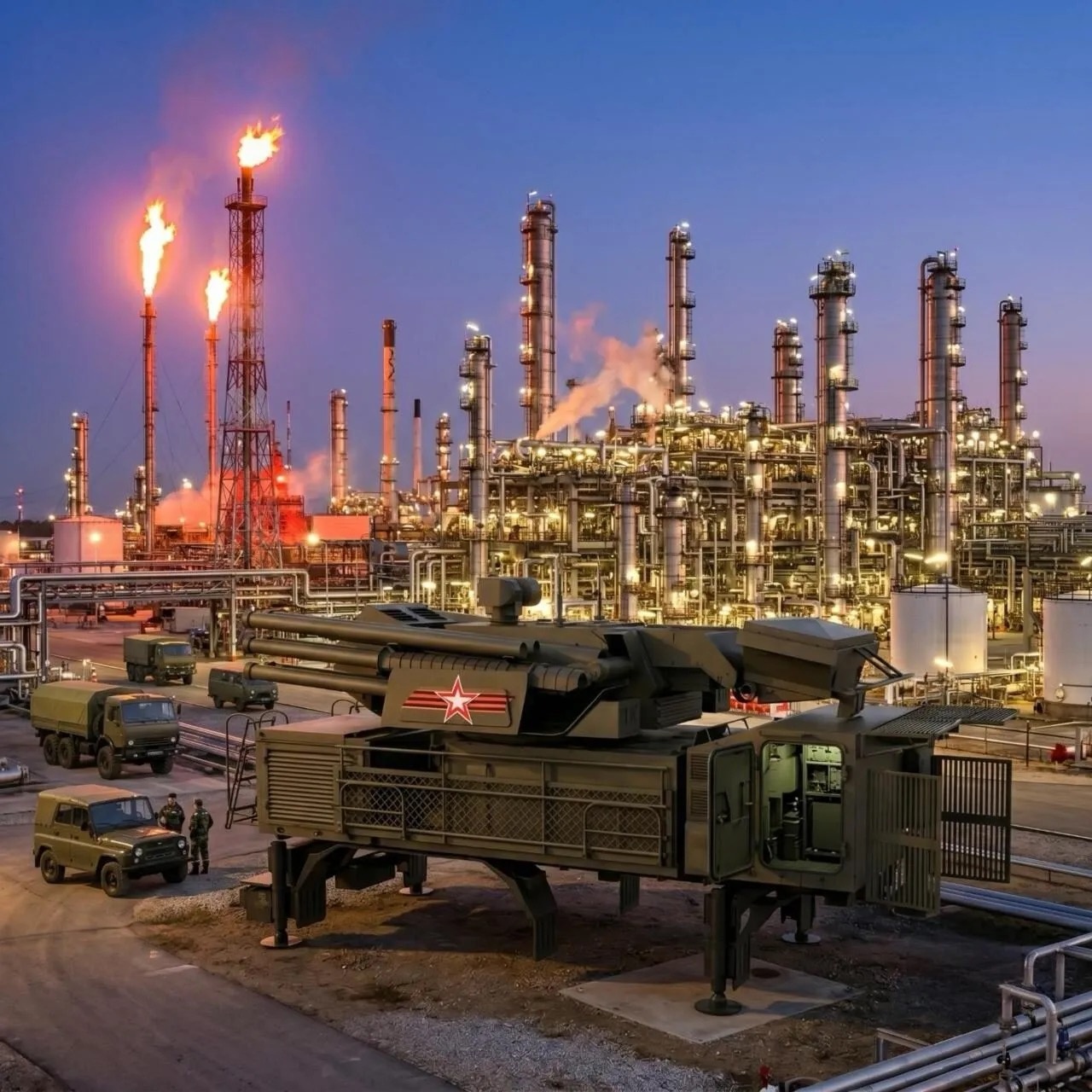
Trends in the development of air attack weapons indicate the need not only for new solutions but also for the extensive robotization of combat-proven short-range air defense systems—in particular, the Pantsir-S1 family of anti-aircraft missile and gun systems (ZRPK).
It would be practical to redesign these platforms as fully autonomous modular systems with a significantly increased munitions load.
The modernized system should be capable of autonomous operation in a given area without direct human intervention or maintenance, within a period of several days to two weeks.