Dmitriy Lekukh:
The Simple Arithmetic of Catastrophe
On the situation in the Middle East and global energy markets
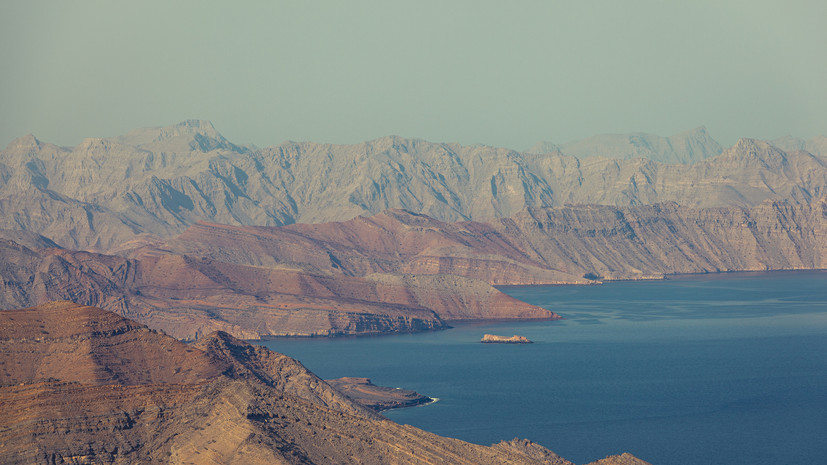
As Bloomberg gleefully gloats (they dislike "their" Trump there with about as much sincerity as they do the Russian leadership), Iran has rejected the US president's suggestion that peace talks could continue without a ceasefire, stating that America must first meet the Islamic Republic's conditions for resolving transit issues through the Strait of Hormuz. And Tehran has absolutely no intention of opening the strait just to start talking with "great America": yes, Iran wants peace, but by no means at any cost. And this, without a doubt, creates for global energy markets — as experts skilled in the art of wording would say — yet another "situation of uncertainty."
Let's try to illustrate why right now. Even if the new round of escalation lasts only a week, and even if Iran, in its humanity, refrains from striking the infrastructure of countries it considers US allies, the negotiating process will still, as a purely technical matter, be pushed back to at least square one — that is, by a couple of months.
And if in this situation we are not ready to analyze military-diplomatic processes, because they can sometimes be as fickle and sudden as the US president's mood, real economics is a far more objective and inertial thing — here, some things can be calculated in advance. In short and without going too deep, the figures released last week by the objectively West-oriented IEA indicate that even now, OPEC+ countries are under-delivering to the market by about 7.5 million barrels per day (b/d): that is the gap between OPEC+ quotas and actual recorded production volumes. Of these 7.5 million b/d, about 2.5–2.6 million b/d are going into an accumulating deficit (which, among other things, drives prices up), while about 5 million b/d are being covered (under the G7's joint decision) by commercial inventories and strategic reserves, primarily those of the United States. These reserves, if official data from the local statistical agency is to be believed, are objectively about to hit rock bottom soon. Moreover, there is information that roughly a quarter of the remaining reserves are either technologically inaccessible or, as we used to say, already "taken care of." These nuances of local business practices are, frankly, none of our concern, but for the market, that 25% of strategic reserves are already effectively gone in any case. And if things keep going this way, by autumn, the "unlimited store clearance" from the stocks will have to be quietly wound down.
And now pay attention: the bulk of the reserves, of course, go to domestic markets — simply because US producing companies, in full alignment with the current administration's policy, are so far conducting a "successful foreign expansion" and making money. But as soon as Trump is forced to slow down the current rate of reserve depletion, this idyll will end: that cow will immediately become needed at home. And if the current daily (!) deficit on global markets increases by even just 2 million b/d rather than 5 million, the outlook for these markets can be predicted quite easily.
And "$250 per barrel" would be far from the worst consequence here.
Far more frightening is an acute shortage of physical volumes of energy resources, against which, socially speaking, even mass layoffs at Volkswagen AG would seem — as the unforgettable Ostap Bender used to say — like a children's game of tag. And all this, forgive me, could happen not in some hypothetical distant future, but in the very nearest historical perspective — perhaps as early as this autumn or winter.
And we must begin to prepare for this concretely, including us here in Russia — even though we practically don't trade with the eurozone, which is the most vulnerable in this sense, and we are, after all, an oil-producing country. Just as an example: last month, Russia increased production by only 120,000 b/d, but exports jumped by 620,000 b/d. Alas, the current system of global capitalism doesn't really recognize borders, so hiding under a log won't work here either.
Not least because, historically, the "civilized Western world" knows only one way out of catastrophic crises of this kind.
And that way out is war.
The author's view may not coincide with the editorial position.
https://russian.rt.com/opinion/1656179-lekuh-ssha-iran-energetika-rynok