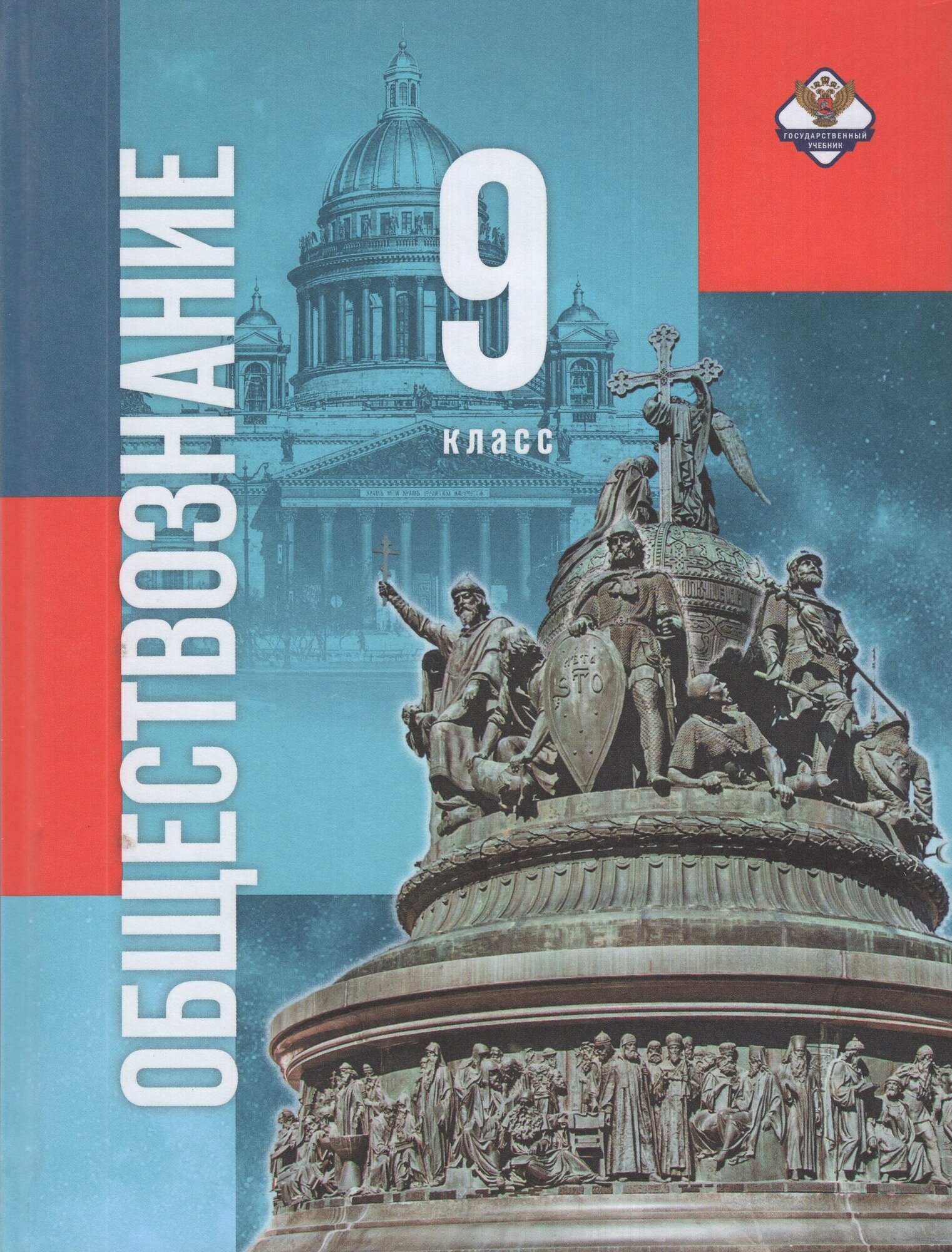
A quote from new Russian Social Studies textbook for 9th grade, one edited by Medvedev. In regards of authority, family, community, state:
AUTHORITY
Large human communities, encompassing thousands and millions of people, could not have formed if they were built solely on voluntary agreement. Indeed, people are far from always agreeing even to what is useful for them, but requires effort. They are even less ready to do what is necessary for the common good, but is unprofitable or dangerous for them personally.
To ensure the sustainable development of society, it cannot rely exclusively on the voluntary mutual assistance of people. Reasonable coercion is a necessary component of societal development. The instrument of social coercion becomes authority. Specific individuals or groups are endowed with the right to demand from others the fulfillment of established rules and to punish for their non-compliance. In its simplest form, authority exists in the family, where children are obliged to obey their parents. For stable authority to exist, mere coercion alone is insufficient; it is impossible without the consent of the people to submit to it. "One can do anything with bayonets, except sit on them," said Napoleon.
Public recognition of the rights of authority is called legitimacy. Its forms can be different. For a long time, religious legitimacy played a leading role — authority was considered established by God. Initially, subjects believed in the special mystical properties of rulers. In more modern societies, authority received support in popular assemblies, zemsky sobors, and through universal elections of parliament and the president. When it comes to democracy (rule of the people), it is assumed that the people are the very source of authority. However, even in this case, the people do this through specific persons making the majority of decisions. Legitimacy is always closely connected with legality — violation of the law and arbitrariness lead to a rapid decline in its authority.
The existence of authority allowed the mobilization of the resources of a huge number of people to solve the most complex tasks — from the creation of Egyptian pyramids to the construction of beautiful cities, canals, and roads. Such grandiose achievements as the construction of the Trans-Siberian Railway or human spaceflight would simply be impossible in a society where authority does not exist, and the interaction of people is limited to voluntary agreement between a small group of neighbors.
FAMILY — COMMUNE — PEOPLE — STATE
The simplest and at the same time most solid level of social solidarity (cohesion) and mutual connection between individuals and social groups is the family: it is united by mutual feelings and blood kinship, mutual moral and legal obligations and rights, the authority of elders, as well as discipline necessary for joint affairs. In the family, a person is born, learns to be human — to love, care, empathize, find compromises between personal interests and the welfare of other people. The family provides certain living and material conditions — earns money, manages common property, produces or acquires necessary goods. Family members communicate, jointly organize leisure, engage in creativity, and relax. Younger members of the family adopt the experience of their elders. The family controls the behavior of its members, warning them against actions unacceptable to society. Considering the variety of functions of the family and its significance for society as a whole, philosophers and scholars call the family the "social DNA."
The next level of social solidarity historically was a relatively small human group — the commune [or community]. People in it knew each other personally, perceived each other as their own, even if they were not relatives. An example is the peasant rural commune. A more complex form of commune appeared with the emergence of cities. The ancient Greeks called it a "polis" (hence the word "politics" ). The citizens of the polis felt themselves to be fellow citizens.
The number of citizens gradually grew, and often they no longer knew each other personally. The most important feature of urban life became the "compaction" of social ties between those who did not know each other personally. In this sense, Aristotle called the city "the unity of the unlike."
Even today, various forms of interaction and self-government of apartment owners in multi-apartment buildings, dacha cooperatives, and permanent residents of villages and towns are operating.
The most important level of social solidarity both in antiquity and in the modern world is the ethnic level — clan, tribe, nation. At the basis of these communities, from time immemorial, lay feelings of kinship, a common language, culture, and customs.
The highest form of societal organization for thousands of years has been the state. Along with rights, which it guarantees to every person and citizen, it imposes duties. The state has full legal authority over its territory and population — citizens; it can introduce its own laws and conduct policies without outside interference. This is called sovereignty.
The response to Russia's pursuit of an independent foreign policy was provocations along the perimeter of its borders. The West unleashed a sanction war against Russia, which was joined by many supposedly "independent" international organizations — sports, cultural, and scientific ones. They began to pursue a policy of discrimination against Russian athletes, artists, and scientists. In modern realities, one must treat with great caution the activities of communities receiving assistance, including financial aid, from abroad. Such communities can appeal to commonality of religion, culture, and universal human values and human rights, but in fact they often serve only as a screen for the actions of states hostile to us.
(Concluding Insert)
Each of us represents Russian society and the state. We share the traditional values of our society, are proud of its history, and feel ourselves to be Russians. We can achieve the full realization of our rights and the protection of our interests only as citizens of our state.