Subject: Russia & Ukraine's latest insane tactic. Below is a Diario de Notícias news update & photo shared by a retired, major, Portuguese newsman - Carlos Fino – on his Social Media account, plus the respective link. It's translated here below into English. I'll also add, before the update, a comment to it made by a dear friend, a distinguished Lawyer / Legal Scholar – Alberto Jorge Carvalho – as his words reflect my own thoughts so well and so sucinctly 🙏
https://www.facebook.com/share/p/1BGnERHa8g/
[Alberto Jorge Silva – comment] — What caught my attention most was the interference with that so-called special flight squadron whose specific purpose is to transport the highest authorities of the State, and what’s more, right in the middle of an approach maneuver for landing.
This is the ultimate madness of the brainless in Kiev! I only ask: and if the Russians wanted to retaliate, what would it be like?
⤵️ [post]
Ukrainian drones paralyse Moscow airports and force aircraft in Putin’s entourage to divert
DN [Diário de Notícias]
Attack using drones and balloons led to the closure of the Russian capital’s airspace for almost seven hours, left one person dead in Podolsk and forced aircraft to remain airborne.
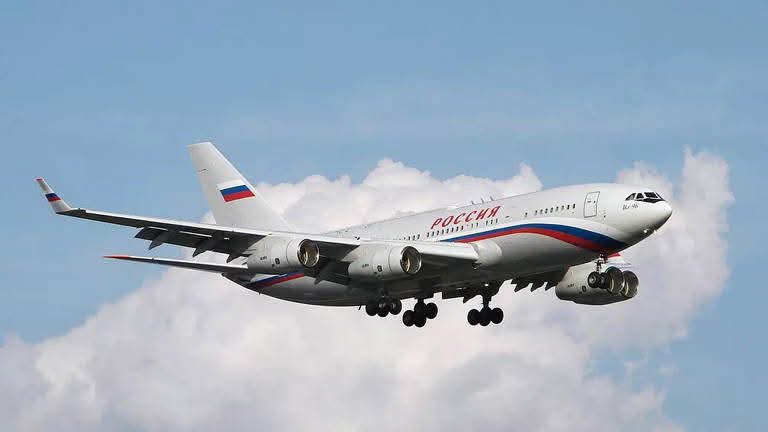
A coordinated attack by Ukrainian unmanned aerial vehicles this Friday, 9 October, brought about the near-total paralysis of air traffic over the Russian capital, catching four aircraft of the “Rossiya” Special Flight Squadron — the unit responsible for transporting the highest state officials — in the middle of their approach manoeuvre.
The aircraft were returning from Turkmenistan, where Vladimir Putin had taken part in a summit of regional leaders and held a bilateral meeting with his Iranian counterpart, Masoud Pezeshkian.
Public telemetry data from Flightradar24 indicate that the four aircraft in the government fleet were placed in prolonged holding patterns around the capital. With landing at Vnukovo airport, the usual base for official trips, impossible, at least two of the aircraft were forced to divert to alternative airports, including St Petersburg.
For reasons of military protocol and security, the Kremlin does not disclose which aircraft the president is travelling on, regularly using identical aircraft on a parallel route.
According to international media, the airspace closure was imposed by the Russian regulatory agency, Rosaviatsia, at around 15:40 local time (13:40 in Lisbon), and had a knock-on effect for six to seven hours at the four metropolitan airports: Vnukovo, Sheremetyevo, Domodedovo and Zhukovsky.
More than 370 commercial and cargo flights were delayed and dozens of connections were cancelled, forcing hundreds of passengers to spend the night in the terminals.
On the ground, the consequences of the attack were felt on several fronts. While the Mayor of Moscow, Sergey Sobyanin, assured that 15 drones were intercepted on the outskirts of the capital, the governor of Moscow Oblast, Andrey Vorobyov, confirmed that falling debris in the suburban district of Podolsk killed a man and injured a resident, damaging a block of flats and setting three vehicles alight.
The Ukrainian air offensive reportedly also involved a combined tactic with the launch of small reconnaissance balloons over the Yaroslavl region, north-east of the capital.
Russian security forces admitted operations to shoot down these aerostats, described by military analysts as a manoeuvre designed to saturate the radars of the Pantsir and S-400 air-defence systems before the attack vectors entered.
The incident highlights unprecedented pressure on Russia’s aviation infrastructure. According to official estimates from Rosaviatsia itself, the rate of prolonged delays in national airspace has already risen by 20% over the past year due to frequent precautionary interruptions prompted by air attacks.