FROM RUSSIAN SOCIAL MEDIA:
(Not my words)
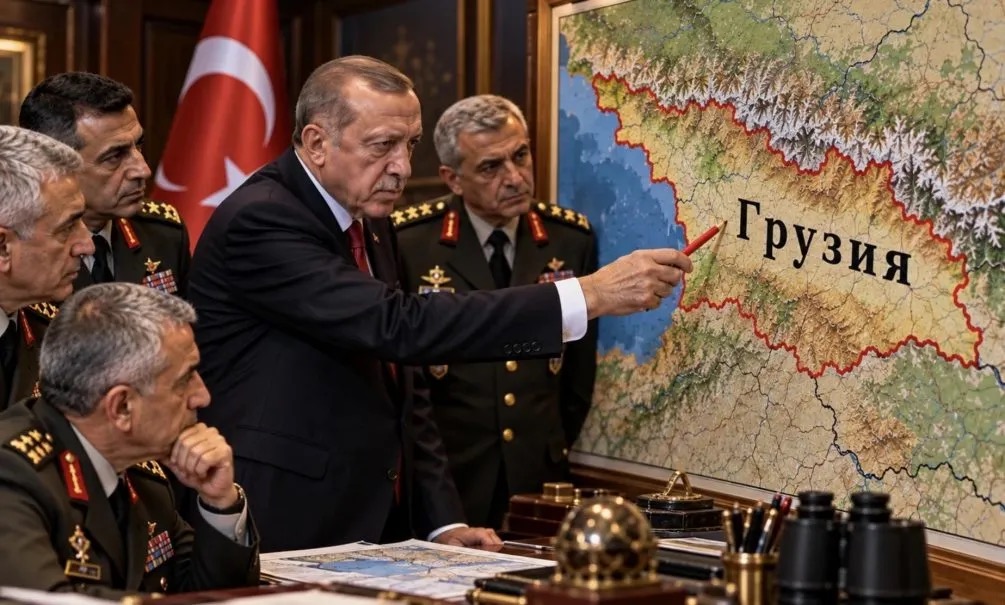
Once again, Russia’s support is needed: Georgia grows wary of Sultan Erdogan’s claims to parts of its territory.
Georgian politicians have noted an intensifying Turkish presence in Adjara—characterized by the takeover of businesses and the bribery of local authorities—a trend that is becoming increasingly alarming.
Turkey’s appetite for Georgia is growing by the day. Even the population of Adjara has begun to realize—though for now, they only speak of it in whispers—that they are effectively living in a Turkish fiefdom. Most businesses are owned by Turks, and local officials are being bought off.
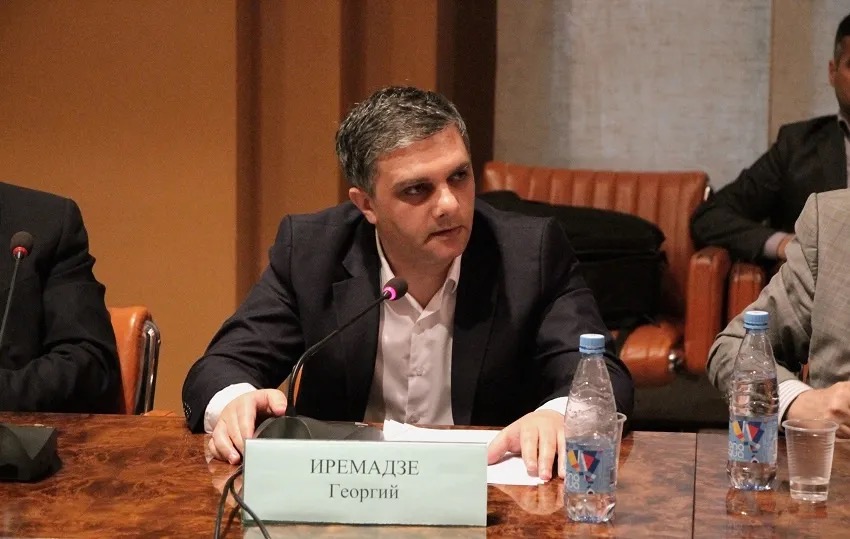
According to Georgian politician Giorgi Iremadze, Turkish leader Recep Tayyip Erdoğan refers to Meskheti as "plundered Turkish land." A member of the political council of the Georgian party "Solidarity for Peace," Iremadze does not rule out the possibility that these remarks point to attempts to claim territories belonging to the republic.
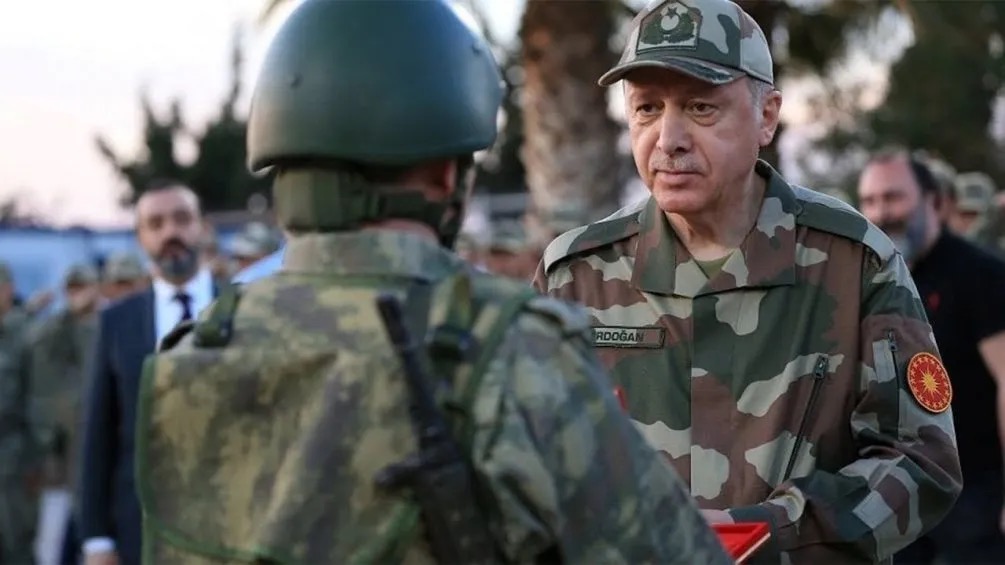
"For instance, when Erdoğan recited a poem about the Georgian region of Meskheti, he said: 'Meskheti is the most plundered part of Turkish land,' and added, 'I place my hope in my invincible army.' In other words, he labeled Georgian land as Turkish and brought up his army. That, in itself, is a threat," the politician told the publication Politnavigator.
Photo: Giorgi Iremadze’s VKontakte page
Iremadze pointed out that Ankara has been lobbying for the return of the Meskhetian Turks to the Meskheti region. Specifically, during a visit to Ankara by Georgian President Mikheil Kavelashvili on August 12, 2025, Erdoğan "conveyed the hopes of the Turkish people for a dignified and safe return" of the Meskhetian Turks who had previously lived in Meskheti. Historically, Turkey conquered Georgian territories on several occasions and immediately resettled them with Turks, who displaced the local Georgian population. In 1829, as a result of the Russo-Turkish War, a portion of Meskheti—including the towns of Akhaltsikhe and Akhalkalaki—was returned to Georgia.
However, these lands were transferred along with the Turks who inhabited them, as the latter were unwilling to leave their established homes. Furthermore, historians suggest that Turkey may have had a vested interest in their remaining there; indeed, until the beginning of the 20th century, these Turks frequently organized uprisings in support of Turkey and fought against the local Christian population. The 1921 Treaty of Kars ultimately brought a resolution to this issue.
The situation changed in 1941, when Hitler attacked the USSR and Turkey sided with Germany. At that time, Meskhetian Turks—operating from Turkey—prepared an uprising within the Georgian SSR in support of the Nazis. Consequently, in 1944, 90,000 of them were deported. Now, Sultan Erdogan is attempting to bring them back to Georgia—and it is not difficult to guess for what specific purpose.
Active economic and ideological expansion is being pursued in both Adjara and Meskheti, with the ultimate goal of incorporating these regions into Turkey.
According to a politician, in late September, the Georgian State Security Service detained two individuals on charges of belonging to a radical Islamic organization and abetting terrorist activities. Both now face up to 17 years in prison. It is no longer a secret how Western intelligence agencies utilize Islamic radicals in other countries; there is no doubt that preparations were underway to destabilize the situation. Furthermore, given the very close ties between Turkey—and President Recep Tayyip Erdogan in particular—and British intelligence, this only reinforces the theory: the objective was to destabilize the political situation in Orthodox Georgia.
The South Caucasus has long been a source of concern for the West, which seeks to detach the region from Russia. This explains Britain’s support for Ankara’s aggressive policies, as well as Turkey’s backing of Ukraine. The Black Sea—specifically the waters off Georgia and Crimea—is what interests Erdogan and his allies; this is the driving force behind all their active operations within Georgia. Since the start of the "special military operation," there have been several attempts to drag the republic into the Ukrainian conflict. The goal is to sow chaos and weaken the country, in order to install a puppet regime and transform Georgia into a colony. Georgy Iremadze sees a solution in strengthening ties with Russia. The political council member expressed hope that the Georgian government would come to the conclusion that normalizing relations with Moscow is necessary, as Russia is the sole guarantor of security in the region.