THE GREAT BRITISH RIP-OFF OF IRAN
In 1953 at the behest of the UK, Eisenhower approved the CIA's Operation Ajax that led to the overthrow of the democratically elected government of Muhammad Mosedegh. Here is why.
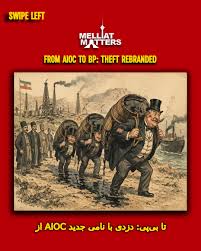
In 1950, just prior to the nationalization of the Iranian oil industry in 1951, the British government received over £2.2 Billion in today's currency in taxes from the Anglo-Iranian Oil Company (AIOC). That same year, AIOC's annual profits from Iranian oil were estimated at roughly £9 billion, of which the Iranian government received only £720 million in royalties or 10%. On top of this the company paid its Iranian workers subsistence wages:
In the early 1950s, the Anglo-Iranian Oil Company (AIOC) paid most of its Iranian workers a wage of approximately 50 cents per day. This low pay was a central grievance that led to the nationalisation of the oil industry in 1951.
Key details of worker compensation and conditions included:
Wage Disparity: While Iranian labourers earned around 50 cents a day, British expatriates and managers received salaries estimated to be up to ten times higher.
Minimum Wage Fluctuations: By mid-1946, following mass strikes, the minimum daily wage was officially increased to 35 Rials (roughly 50–60 cents at the time). However, the AIOC frequently paid its workers as little as 16 Rials per day when factoring in "free" rations of flour, sugar, and tea.
Lack of Benefits: Iranian workers generally received no vacation pay, no sick leave, and no disability compensation.
Living Conditions: Most Iranian labourers lived in "slum"-like environments or shanty towns like Kaghazabad ("Paper City" ), which lacked basic infrastructure like running water, electricity, or paved roads. In contrast, British staff lived in luxurious, segregated suburbs with dedicated buses, cinemas, and clubs.
Skill Exclusion: Iranians were systematically excluded from high-level technical and managerial positions, which were almost exclusively reserved for British personnel.
Anglo-Iranian Oil Company (AIOC) (now known as BP) was at that time the largest overseas investment for the UK, and in 1950, it provided 85% of the fuel requirements for the British navy.
1954 Consortium Agreement: After the 1953 coup that overthrew Prime Minister Mossadegh, a new consortium was organized. The AIOC (later renamed BP) received a 40 percent share of Iranian oil production, while American companies took another 40 percent.
After Iran nationalised the oil industry in 1951, the UK initiated a boycott and took the case to the International Court of Justice. As a result, Iranian oil production dropped from 242 million barrels in 1950 to just 10.6 million barrels in 1952, causing significant disruption to the AIOC's profit streams until the consortium was formed in 1954.
It's not just about the Oil it's mainly about the profits. Nothing has changed over 70 years later. White supremacist colonialism is alive and doing very nicely.